
You are on a path in life. Do you have plans you would like to accomplish this year, next year or in the long term? Do you have ideas that will help you get there? Some people would say yes, they have goals, and they are working toward them. Others seem too just live day-to-day. No matter which way you approach the future, you are on a path; one you choose, or one life chooses for you. That is the principle of the path.
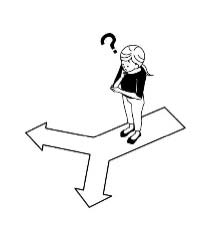
My mother had a saying that has helped me through life. “If you come to a fork in the road, take it.” I have learned to love that statement. Walking down that imaginary road, and coming to that proverbial fork in the road, you have two choices, each path you can choose. You can either take the fork to the left, or you can take the fork to the right. Time will not let you simply stand at the fork and not go forward. You will need to choose or get swept up in the world’s flow.
There are choices we make every day, some important things, some not so important things. Whichever path we choose, that path will lead to another fork eventually. To me the principles we use to make the path choices are what matter. We encounter these path choices in multiple areas of life. For example, do we make good choices in our relationships or about what we eat or how much we exercise? Good choices and bad choices put you on a path to healthy relationships and healthy living, or not. What do we do with our time? Investing it or wasting it are both paths we can choose. How we use our finances and other resources will also be path choices.
Do we have a decision-making philosophy that we use to guide us in these decisions? Take another look at the picture on the cover. The fork in the road leads to two different paths, a wide path, and a narrow path. The wide path leads to promises of worldly pleasures that focus on self, money, big city, bright lights. The narrow path leads into an area where we cannot clearly see what is ahead of us. Now look at the sky over each area. The wide path leads into an area with stormy weather ahead. The narrow path leads into the light and Jesus is there waiting for us.
One of my greatest passions is for people to know why they believe what they believe. As a society that is always in a hurry, when people hear something that sounds right to them, they are quick to believe it is factual. They typically do not question or research the truth of the statement; they just believe it and “take the wide path”, the world’s accepted opinion.
When I hear someone’s thoughts on a subject, I like to compare their thoughts to what I currently believe. If I listen to someone speaking about a concept, before I agree with them, I always run the thought through my current belief or my “filter”. What do I already believe about this subject? Does this statement agree with my current perception of the topic, or does it challenge what I currently believe? If it challenges me, I need to research the thought, ponder the possibilities, and decide if the facts change my mind and reset my understanding of the topic.
Sometimes that process is easy. For example, systems built on logic, like math, are easily proven and understood. Other thoughts however are not as easy to prove. The one thing that is true with me is if I cannot prove the new thought is correct, I cannot accept it. I may continue to search the thought for a better understanding of the concept but will not change my core belief without facts that convince me to do so.
I believe there are only two basic decision-making philosophies. We either follow principles that feel right to us, or we follow Biblical principles. The problem with using feelings as a guide is they change throughout our life. Biblical principles never change. Until we settle this basic question, we will live in flux.
 Christian Life Coach